

NHL Gift Ideas
What Are the NHL Teams? Full 2025 Breakdown of Conferences, Divisions & League Structure
Dec
How the NHL Is Structured in 2025
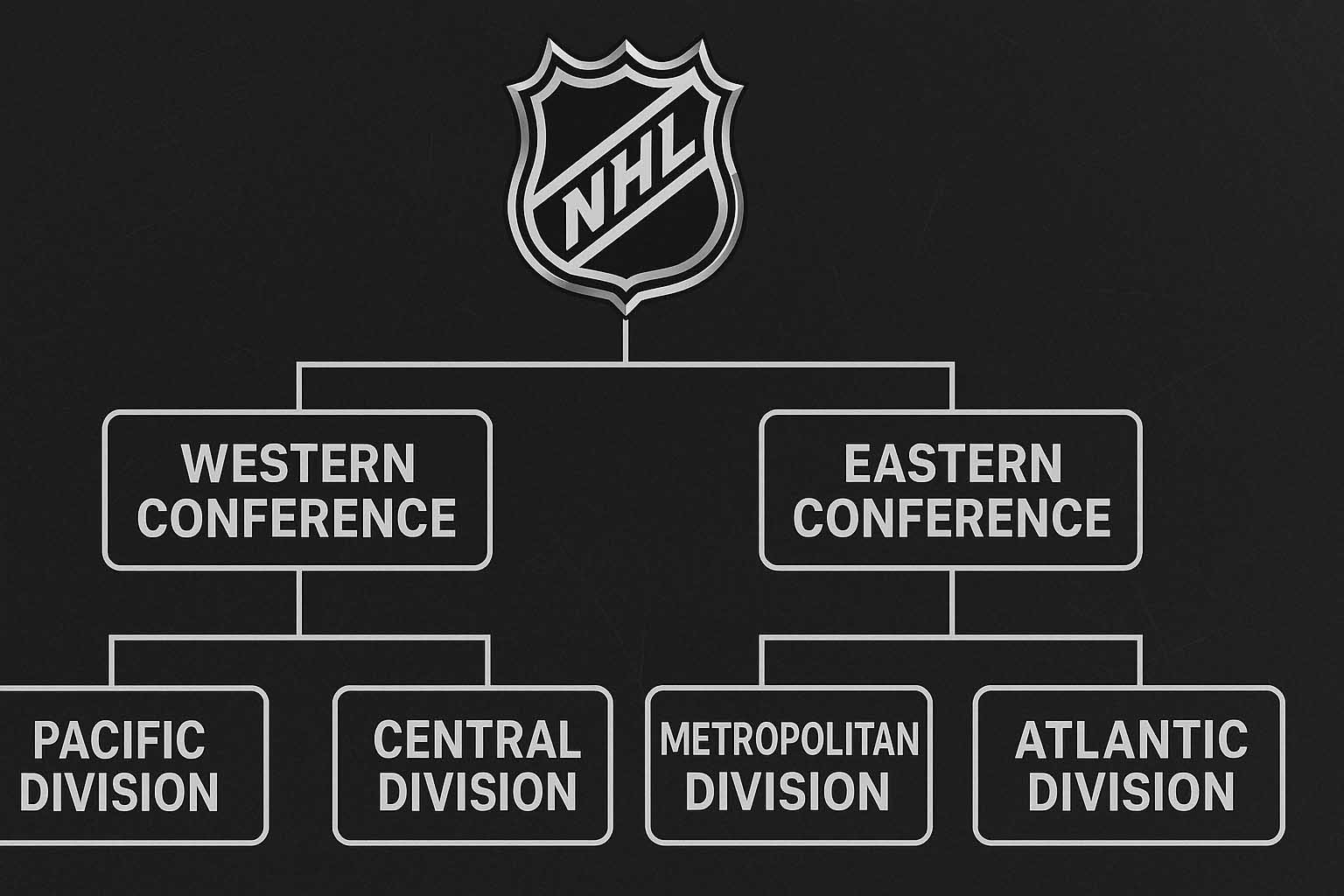
At a high level, the NHL is organized into two conferences—the Eastern Conference and the Western Conference. Each conference is further split into two divisions containing eight teams apiece. Regular-season schedules, playoff qualification, and many rivalries are built around this structure, so understanding it will make every standings graphic and schedule grid much easier to read.
The Eastern Conference
The Eastern Conference is home to many of the league’s oldest franchises and some of its most intense rivalries. It contains the Atlantic Division and the Metropolitan Division. Eastern teams tend to be clustered more closely together geographically than their Western counterparts, which reduces travel distances but increases the frequency of meetings with traditional rivals.
Because so many major media markets are located in the eastern half of North America, Eastern Conference matchups often dominate national television windows. This does not necessarily mean the Hockey is better in the East, but it does mean fans are likely to see Eastern teams on highlight shows more often, especially when they play in prime-time slots.
The Western Conference
The Western Conference covers a vast area stretching from central Canada and the American Midwest all the way to the Pacific coast. It is divided into the Central Division and the Pacific Division. Teams in this conference frequently log long flights and cross multiple time zones, which affects rest, practice schedules, and road records.
Western clubs often develop fierce regional rivalries to offset those travel demands. Whether it is battles between Alberta teams in Canada or showdowns between California franchises and the newer Seattle and Vegas entries, the Western Conference brings together a mix of traditional and emerging hockey markets.
Full List of NHL Teams by Conference and Division
Now that you have a sense of the overall structure, here is a division-by-division rundown of the 32 teams that make up the league in 2025. Exact divisional lineups can change slightly when the league realigns, but the following breakdown reflects the current arrangement used for scheduling and standings.
Atlantic Division (Eastern Conference)
The Atlantic Division features a blend of historic Canadian and American clubs along with newer Sun Belt franchises:
Boston Bruins, Buffalo Sabres, Detroit Red Wings, Florida Panthers, Montreal Canadiens, Ottawa Senators, Tampa Bay Lightning, Toronto Maple Leafs.
Several of these teams trace their roots back to the early days of the league. Montreal and Toronto are central to hockey history, while Detroit and Boston also have long histories and passionate fan bases. Florida and Tampa Bay represent successful expansion into non-traditional markets, proving that high-level hockey can thrive even in warm climates.
Metropolitan Division (Eastern Conference)
The Metropolitan Division is known for dense geography and long-standing rivalries among teams located along the East Coast:
Carolina Hurricanes, Columbus Blue Jackets, New Jersey Devils, New York Islanders, New York Rangers, Philadelphia Flyers, Pittsburgh Penguins, Washington Capitals.
Short travel distances mean these teams see a lot of each other, both in the regular season and in the playoffs. Rivalries such as Rangers vs. Islanders, Penguins vs. Flyers, and Capitals vs. Penguins have produced some of the most memorable series in recent decades.
Central Division (Western Conference)
The Central Division covers much of the American Midwest and central Canada:
Arizona Coyotes, Chicago Blackhawks, Colorado Avalanche, Dallas Stars, Minnesota Wild, Nashville Predators, St. Louis Blues, Winnipeg Jets.
This division blends original-era franchises like Chicago with newer teams such as Nashville and Minnesota. Altitude in Denver, long trips to Arizona and Dallas, and winter weather in northern cities create a variety of playing environments, contributing to a distinctive brand of hockey.
Pacific Division (Western Conference)
The Pacific Division stretches along the western side of the continent:
Anaheim Ducks, Calgary Flames, Edmonton Oilers, Los Angeles Kings, San Jose Sharks, Seattle Kraken, Vancouver Canucks, Vegas Golden Knights.
This group includes the NHL’s two newest teams—Vegas and Seattle—plus long-standing Canadian franchises in Calgary, Edmonton, and Vancouver. California teams have their own history of success, with Los Angeles and Anaheim each having won Stanley Cups in the modern era.
How Many Teams Are There, and Why 32?
With 32 franchises, the NHL enjoys a balanced structure. Each conference has 16 teams, and each division has eight. This symmetry simplifies scheduling and playoff seeding while still providing enough variety for fans to see every opponent at least twice per season, once at home and once on the road.
If you have read discussions about how many teams in NHL, you know that the league did not always look this way. For much of the 20th century it operated with far fewer clubs, first as a small Canadian-centric league and later during the six-team era that older fans still talk about. Multiple waves of expansion, including recent additions like the Vegas Golden Knights and Seattle Kraken, brought the league to its current size.
Benefits of a 32-Team League
Thirty-two is a convenient number because it feeds directly into a 16-team playoff bracket, with eight qualifiers from each conference. It also leaves room for strong regional rivalries and ensures a mix of traditional and emerging markets. For fans, a 32-team league means constant variety in nightly matchups and a wide range of stories to follow across North America.
Potential Future Expansion and Realignment
League officials occasionally acknowledge interest from cities that do not currently have teams, but any new expansion would need to keep conferences balanced and respect travel logistics. Some fans speculate about future franchises in places like Houston or Quebec City, but until formal announcements are made, 32 teams remains the stable reality of the NHL landscape.
Who Were the Original NHL Teams?
Understanding how today’s 32-club format evolved requires a brief look back at league history. When the NHL formed in 1917, it began with just four teams: the Montreal Canadiens, Montreal Wanderers, Ottawa Senators (original version), and Toronto Arenas. These early franchises competed in a much smaller, mostly Canadian league where travel was limited and rosters were dominated by local talent.
Over time, the league added and lost franchises, culminating in the “Original Six” era from 1942 to 1967. During those years the NHL consisted of six teams: the Montreal Canadiens, Toronto Maple Leafs, Boston Bruins, Chicago Blackhawks, Detroit Red Wings, and New York Rangers. Many fans mistakenly assume these were the first teams in the league, but in reality they represent the six clubs that survived after a period of contraction and wartime challenges.
From Original Six to Modern Expansion
The NHL doubled in size in 1967 when it expanded from six to twelve teams, adding new markets across the United States. Additional expansion waves in the 1970s, 1990s, and 2000s brought in teams from the American South and West, as well as more Canadian representation. Relocations, such as the Quebec Nordiques becoming the Colorado Avalanche and the original Winnipeg Jets moving to Arizona, further shaped the map.
The most recent step came with the arrival of the Vegas Golden Knights in 2017 and the Seattle Kraken in 2021. Those two additions brought the total to 32 and helped balance the number of teams between the Eastern and Western Conferences.
Canadian vs. American Teams in the NHL
Out of the 32 franchises, seven are based in Canada and twenty-five are based in the United States. Canadian clubs include the Calgary Flames, Edmonton Oilers, Vancouver Canucks, Winnipeg Jets, Ottawa Senators, Toronto Maple Leafs, and Montreal Canadiens. The remaining teams are scattered across American states from California and Arizona to Florida and Massachusetts.
Even though there are fewer Canadian teams, Canadian influence is much larger than those raw numbers suggest. If you explore deeper analyses of how many canadians on NHL teams, you will find that Canada still supplies a significant share of the league’s players. Many rosters are built around Canadian-born stars even when the franchises themselves are located in U.S. cities.
California and Other Key U.S. Markets
Some U.S. states host multiple NHL teams. California, for example, is home to the Anaheim Ducks, Los Angeles Kings, and San Jose Sharks. New York has three franchises when you include the Islanders, Rangers, and Buffalo Sabres. These multi-team states help extend the league’s reach into huge media markets and create local rivalries comparable to those found in Canada.
Which NHL Teams Have Never Won the Stanley Cup?
While many clubs have captured hockey’s ultimate prize, several current NHL teams have never won the Stanley Cup. This list changes if and when a team finally breaks through, but as of recent seasons, franchises such as the Arizona Coyotes, Buffalo Sabres, Columbus Blue Jackets, Florida Panthers, Minnesota Wild, Nashville Predators, Ottawa Senators (modern era), San Jose Sharks, Seattle Kraken, Vancouver Canucks, Vegas Golden Knights before their breakthrough, and Winnipeg Jets are among those who spent long stretches chasing their first championship.
For fan bases in these markets, the pursuit of a first Cup win can define an era. Playoff runs feel especially intense, and heartbreaking near-misses become part of team identity. When one of these clubs finally wins, it often produces iconic images that resonate far beyond the local market, as neutral fans tend to rally around long-suffering teams.
Teams With Long Championship Droughts
Some organizations have technically won the Cup but have gone decades without another. Others reached the Final multiple times but fell short. Long droughts can make any appearance in the later playoff rounds feel momentous. Media coverage often highlights how long it has been since a particular franchise last lifted the trophy, adding narrative weight to each series.
Historical databases such as the team pages on Hockey-Reference or the records sections of NHL.com provide detailed timelines of playoff appearances and championship years for every club.
How Divisions Shape Rivalries and Fan Experience
The divisional system does more than organize standings—it creates the emotional backbone of the regular season. Because teams face divisional opponents more often than others, these matchups carry extra significance. Points gained or lost within the division can determine playoff seeding or whether a team qualifies at all.
Classic Eastern Conference Rivalries
In the East, rivalries like Toronto vs. Montreal, Rangers vs. Islanders, and Penguins vs. Flyers generate intense atmosphere both in arenas and on television. Geographic proximity makes it easy for away fans to travel, which means road games often feel like split crowds. These rivalries are reinforced by decades of playoff series, iconic goals, and unforgettable comebacks.
Within the Metropolitan Division especially, the compact cluster of teams ensures that each club regularly battles its neighbors for divisional position. A small slip in form can cause a big drop in the standings, while a good week can vault a team past multiple rivals.
Classic Western Conference Rivalries
In the West, the Battle of Alberta between Calgary and Edmonton remains one of the most intense matchups in the sport. Games between Vancouver and those Alberta teams also carry a special edge. In the Central Division, clashes like Chicago vs. St. Louis or Minnesota vs. Winnipeg combine physical Hockey with fan bases that have long memories and strong regional pride.
Newer rivalries are also emerging as expansion teams like Vegas and Seattle establish themselves. Encounters between Vegas and California teams or between Seattle and Vancouver already feel like natural grudge matches, even though those pairings have only existed for a few seasons.
Conferences, Divisions, and the Road to the Playoffs
The ultimate goal for every NHL team is to qualify for the postseason and compete for the Stanley Cup. Conferences and divisions shape that path. Typically, the top three teams in each division secure playoff spots, and additional wild-card positions go to the next-best records in each conference. This system ensures that divisional performance matters but still leaves room for strong clubs in tough divisions to qualify via wild card.
How Seeding Works
Once the playoff field is set, teams are seeded based on their regular-season records within each conference. Division winners often claim top seeds, which brings home-ice advantage in the early rounds. Wild-card teams usually face tougher opponents and must travel more, reflecting the challenge of qualifying from below the divisional top three.
Because seeding is conference-based, teams only meet opponents from the other conference if both advance to the Stanley Cup Final. That is why understanding conference membership is as important as knowing which division your favorite team plays in.
How Realignment Could Change the Picture
If the league ever adds new teams or relocates existing ones, conferences and divisions may be realigned again. Realignment can refresh rivalries and reduce travel for some clubs while creating new challenges for others. Fans often debate hypothetical maps and schedules whenever expansion rumors surface, demonstrating how closely they follow the structure of the league.
What League Structure Means for Fans
For everyday supporters, knowing how teams are organized helps in several practical ways. It clarifies why some matchups seem to happen constantly while others are rare. It explains why standings graphics group teams the way they do. And it helps fans understand the stakes of each game, especially in the second half of the season when playoff races tighten.
It also enriches how you choose to represent your favorite clubs. Whether you prefer jerseys, hoodies, or more subtle items inspired by NHL apparel guides, understanding conferences and divisions lets you appreciate the historical and regional context behind each logo and color scheme you wear.
Frequently Asked Questions About NHL Teams and Structure
How many NHL teams are there in 2025?
The NHL currently has 32 teams, divided into two conferences and four divisions. Each division contains eight teams, bringing balance to the schedule and playoff seeding format.
Why does the NHL use conferences and divisions instead of one big table?
Conferences and divisions help reduce travel, preserve regional rivalries, and create clearer paths to the playoffs. They also make the schedule easier to manage by ensuring teams play more games against geographic neighbors.
What is the difference between a conference and a division?
A conference is the larger grouping; each conference contains 16 teams. Within each conference, teams are split into two divisions of eight clubs. Regular-season schedules and playoff seeding are influenced by both levels, but divisions are where most nightly rivalries are built.
Which NHL teams have the longest Stanley Cup droughts?
Several franchises have never won the Cup or have gone decades since their last championship. The specific list can change if a team finally wins, but historically clubs like Buffalo, Vancouver, San Jose, and others have faced extended waits, making any deep playoff run particularly emotional for their fans.
Could we see more NHL teams in the future?
It is possible. Various cities have expressed interest in landing a franchise, and the league periodically evaluates expansion or relocation options. Any change, however, would require careful planning to maintain balance between conferences and to ensure that new markets can support long-term success.
Conclusion: Knowing the Teams Makes the NHL Easier to Enjoy
The modern NHL is a complex but well-organized ecosystem built around 32 teams, four divisions, and two conferences. Once you know which clubs belong where, standings charts become far less confusing, playoff races feel more logical, and rivalries start to make sense. Whether you already have a favorite team or are still deciding which logo to wear on your next game-day outfit, understanding the league’s structure will deepen your appreciation for every matchup on the schedule.
The next time someone asks you who plays in which division or how the conferences break down, you will be able to walk them through the answer confidently—and maybe even help them choose their own team to support along the way.
